
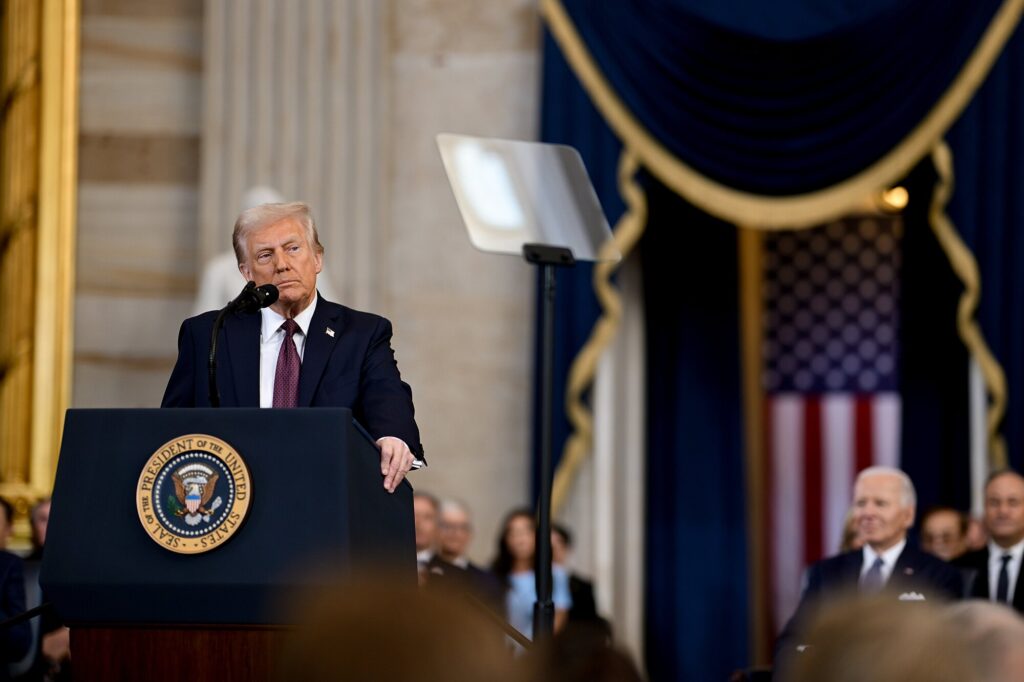
Trump tariffs on India have once again become a major point of political and economic debate in the United States, with several US lawmakers openly stating that these tariffs are effectively acting as a tax on American consumers. As retail prices continue to rise across multiple sectors, critics argue that the burden of trade protectionism is being felt more by Americans than by Indian exporters.
The renewed discussion around Trump tariffs on India comes amid fresh concerns over inflation, supply chain pressures, and cost-of-living challenges faced by US households. Lawmakers from both parties have voiced apprehensions that higher import duties are directly translating into increased prices on everyday goods.
Trump Tariffs on India: What Are US Lawmakers Saying?
According to several members of the US Congress, Trump tariffs on India have failed to achieve their intended goal of protecting domestic industries without harming consumers. Instead, lawmakers argue that American businesses are passing on the increased import costs to shoppers, leading to higher retail prices.
One senior lawmaker described the tariffs as “an indirect sales tax on American families,” highlighting how consumers end up paying more at checkout counters for products that rely on Indian imports or components.
Retail Prices Soar Across Key Sectors
The impact of Trump tariffs on India is being felt most acutely in sectors such as pharmaceuticals, textiles, auto components, electronics, and household goods. Many US retailers source raw materials or finished products from India due to cost efficiency and supply reliability.
With higher tariffs in place, importers face increased expenses, which are ultimately reflected in retail pricing. Analysts note that this trend is contributing to overall inflationary pressure, especially at a time when American consumers are already grappling with rising fuel, housing, and food costs.
Why India Matters in US Supply Chains
India is one of the world’s largest exporters of generic medicines, textiles, and engineering goods. The Trump tariffs on India have disrupted long-established supply chains, forcing US companies to either absorb losses or raise prices.
Experts argue that replacing Indian suppliers is neither quick nor cost-effective. As a result, businesses often choose the easier route—passing on the cost to consumers—reinforcing the argument that tariffs function as a consumer tax.
Economic Experts Criticise Protectionist Policies
Economists have repeatedly warned that trade barriers like Trump tariffs on India can backfire. While tariffs are designed to protect domestic manufacturing, they can reduce competition, increase production costs, and limit consumer choice.
Several economic studies cited by US lawmakers suggest that previous tariff rounds resulted in billions of dollars in additional costs for American households annually, with minimal long-term gains for domestic employment.
Political Implications Ahead of Elections
The debate over Trump tariffs on India is also gaining political traction as elections approach. Rising retail prices remain a sensitive issue for voters, and lawmakers fear public backlash if inflation continues to climb.
Some US politicians are now calling for a reassessment of trade policies, arguing that strategic partnerships with countries like India should focus on cooperation rather than confrontation.
India–US Trade Relations Under Pressure
India and the United States share a growing strategic and economic partnership. However, Trump tariffs on India have periodically strained bilateral trade ties. Indian exporters have previously expressed concerns about reduced competitiveness in the US market.
Trade analysts believe that easing tariff tensions could benefit both economies by stabilizing prices, boosting trade volumes, and strengthening supply chain resilience.
What Happens Next?
As retail prices continue to soar, pressure is mounting on policymakers to reconsider tariff structures. US lawmakers advocating tariff reform argue that reducing or eliminating Trump tariffs on India could offer immediate relief to consumers.
Any decision, however, will depend on broader trade negotiations, domestic political calculations, and global economic conditions.
Conclusion
In essence, Trump tariffs on India are increasingly being viewed not as a shield for American industries but as a financial burden on US consumers. With lawmakers warning of rising retail prices and economic strain, the debate over tariffs is likely to intensify in the coming months.
For continued updates, expert analysis, and global economic news, stay tuned to AKP News 786
